
What Is Interconnect Billing? A Guide for Telecom Operators
Every call that crosses a network boundary, every SMS that passes from one operator to another, and every data session that completes over a roaming partner's infrastructure generates a financial obligation between carriers. Interconnect billing is the system of processes, data exchanges, and commercial settlements that turns those obligations into actual revenue. Understanding what that system involves, where it breaks down, and what distinguishes a modern approach from a legacy one is the foundation for making a good vendor decision.
This post covers the fundamentals and provides you with guidance for choosing a comprehensive interconnect billing solution.
Published:

Interconnect Billing Explained
Interconnect billing is the process by which a terminating network charges an originating network for carrying that network's traffic. It applies to voice, SMS, and data services wherever traffic crosses a carrier boundary, whether that boundary is between two domestic operators or between networks in different countries.
The financial flows run in both directions. A mobile operator is simultaneously a buyer and a seller of interconnect services. It pays termination fees to the networks it routes traffic onto, and it collects termination fees from the networks that route traffic onto its infrastructure. The net position, the balance of what is owed versus what is receivable across all interconnect relationships, is what interconnect billing ultimately calculates, verifies, and settles.
For a mid-to-large MNO with hundreds of roaming and interconnect partners, this balance involves millions of individual billable events per day, exchanged across dozens of different commercial agreements, priced in multiple currencies, and subject to continuous reconciliation between what the operator's own systems recorded and what its partners claim.
How CDRs Are Generated and Exchanged
The foundational data unit of interconnect billing is the Call Detail Record (CDR). A CDR is a structured record generated by network equipment at the point where a billable event occurs: a call setup, an SMS delivery, a data session open or close. It captures the parameters needed to price and attribute the event: originating and terminating numbers, timestamps, duration, service type, carrier identifiers, and routing information.
In a typical voice interconnect scenario, both the originating and terminating networks generate CDRs for the same call. These two records should, in principle, agree. In practice, they frequently do not. Clock synchronization differences between network nodes produce timestamp mismatches. Short calls that generate a CDR on one side may fall below the recording threshold on the other. Routing anomalies produce calls that appear in one network's records but not the other's. These discrepancies are normal and expected at scale. Managing them is a core function of the interconnect billing process.
CDRs are collected from network elements, transmitted to mediation systems, and processed before they are used as the basis for billing. In legacy deployments, this collection and transmission process introduces delays. CDRs generated overnight may not be available for billing until the following day. In modern platforms, near-real-time CDR collection reduces this window significantly, which matters both for billing accuracy and for fraud detection.
What Mediation Does
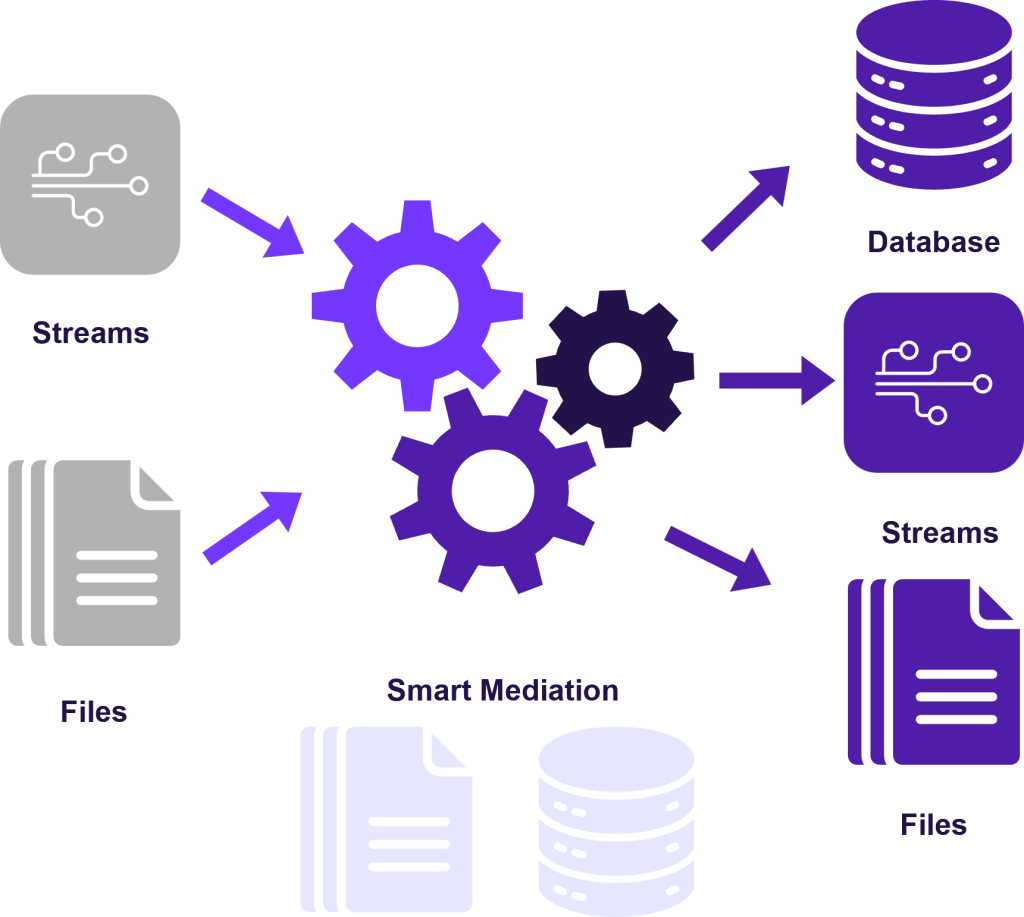
Mediation is the data processing layer that sits between raw network-generated CDRs and the billing system. Its function is to normalize, enrich, and validate CDR data so that it can be rated and billed consistently regardless of which network element generated it.
Raw CDRs from different equipment vendors arrive in different formats. A CDR from a SIP SBC looks structurally different from one generated by an SS7 gateway, even if both describe the same type of billable event. Mediation normalizes these formats into a consistent schema that the billing engine can process uniformly.
Enrichment adds context that the raw CDR does not contain: destination classification, carrier identification based on prefix lookups, rate plan assignment based on the originating carrier's commercial agreement, and MNP data to ensure the call is attributed to the correct terminating carrier in number-portability environments. A CDR that arrives with a dialed number must be translated into a billable destination category before a rate can be applied.
Validation checks whether incoming CDRs meet the quality thresholds required for billing:
- If mandatory fields are populated
- If timestamps fall within acceptable ranges
- If the called number resolves to a known destination
Records that fail validation are quarantined for investigation rather than passed through to billing, where they would generate invoice discrepancies.
Errors introduced at the mediation layer propagate through to invoices, where they become disputes.
How Disputes Arise
Interconnect disputes are a structural feature of the settlement process, not a failure mode. They arise wherever the records held by two operators for the same traffic period do not reconcile. The gap between what one operator invoices and what its counterpart believes it owes is the dispute.
The most common sources are:
- CDR discrepancies: As described above, both networks generate records for the same events. Volume differences between the two record sets, even at the level of a fraction of a percent, produce invoice variances that require resolution before settlement can complete.
- Rate disagreements: Interconnect agreements specify rates by destination, and destination definitions vary between carriers. Two operators may classify the same dialed number range differently based on how their respective rate tables divide national and mobile traffic. A call that one operator bills as a standard domestic rate the other may claim belongs in a premium mobile category.
- Timing differences: An invoice covers a defined billing period. CDRs that arrive at the mediation layer after the billing period closes, late CDRs, may appear in a subsequent invoice cycle, creating discrepancies between what was invoiced and what was actually carried.
- Rounding and currency: Interconnect calls are billed in six-second or one-second increments depending on the agreement. Different rounding conventions applied by two billing systems produce small per-call differences that compound across millions of events into invoice-level variances. Cross-currency billing adds exchange rate timing as a further variable.
None of these dispute types is unusual. Every operator with an active interconnect portfolio manages them continuously. The operational cost is substantial: dispute management requires analyst time, partner communication, document exchange, and often manual reconciliation of large CDR files. Disputes that are not resolved in a timely way delay settlement, create cash flow uncertainty, and accumulate as open items on the balance sheet.
Why Settlements Fail
A settlement failure occurs when two operators cannot agree on the net financial position for a billing period before the agreed payment date. The consequences are commercial: late payment, suspended services, or, in extreme cases, termination of the interconnect relationship.
The underlying cause is almost always a combination of the dispute types described above, compounded by process failures. Manual reconciliation processes that rely on spreadsheet comparisons of large CDR exports are slow and error-prone. Dispute resolution workflows that depend on email exchange with counterpart billing teams at other carriers introduce coordination delays that extend the settlement cycle. When rate plans drift out of sync between the billing system and the signed agreements, the resulting miscalculations surface only at invoice time.
Legacy interconnect billing platforms were designed for the traffic volumes and partner counts of a different era. They process CDRs in batch cycles rather than continuously, apply static rate tables that require manual updates when agreements change, and handle disputes through workflow tools that were not built for the partner count or geographic complexity of a modern MNO's interconnect portfolio.
The result is a billing function that spends a disproportionate share of its operating capacity on reconciliation and dispute resolution rather than revenue optimization.
What a Modern Interconnect Billing Platform Handles Differently
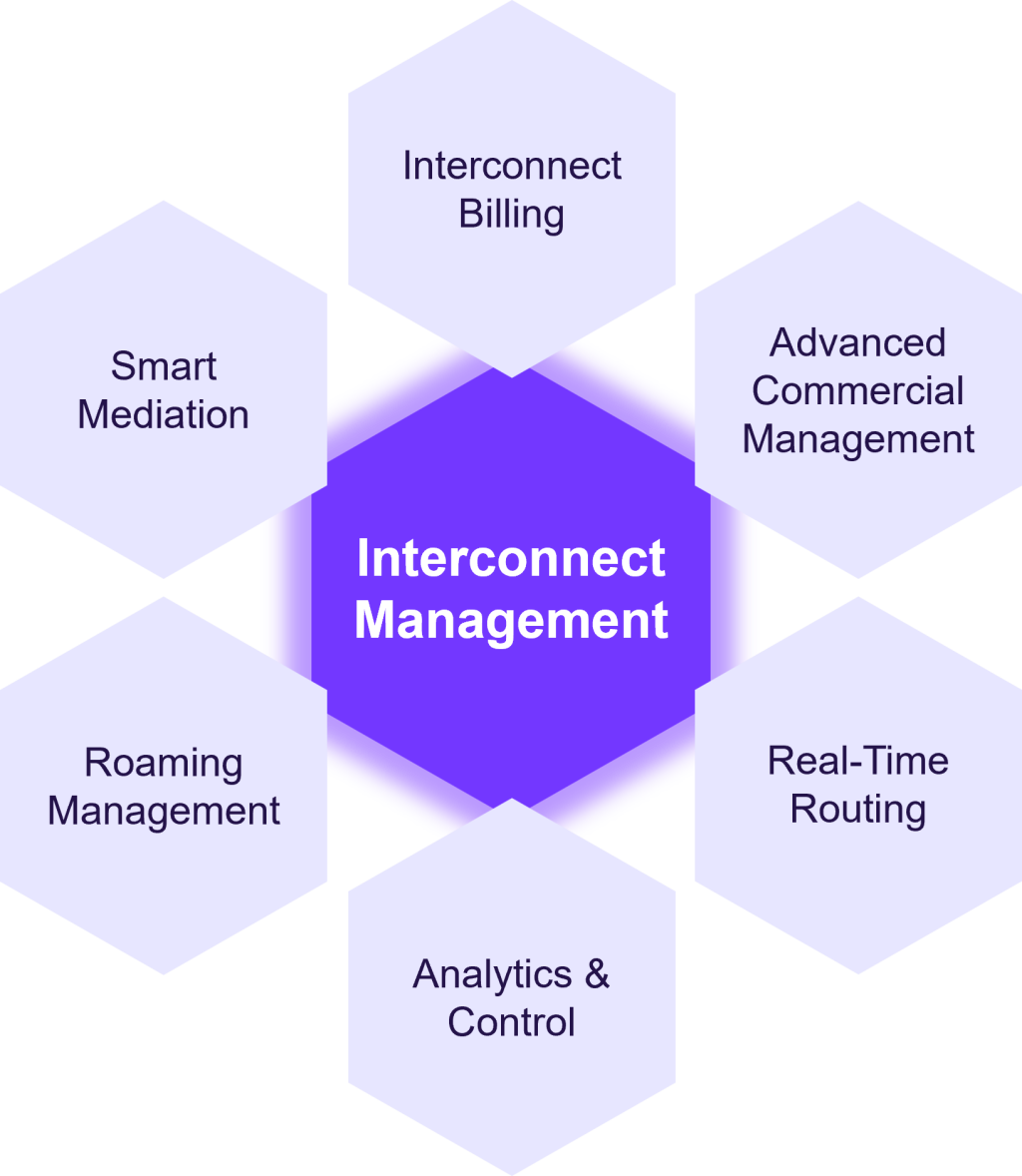
A modern interconnect billing platform addresses the structural causes of disputes and settlement failures rather than managing their consequences.
- Continuous CDR processing, rather than overnight batch runs, reduces the window between event occurrence and billing visibility. Issues in CDR quality are identified in near-real-time rather than discovered when an invoice is already in the counterpart's hands. Automated reconciliation compares inbound and outbound CDR sets continuously and flags variances before they become invoice discrepancies.
- Dynamic rate management applies commercial agreement terms directly from a centralized rate repository that is updated when agreements change, eliminating the gap between signed terms and billing system configuration. Destination normalization handles the different classification schemes used by different carriers, reducing the number of disputes that originate in rate disagreements.
- Automated dispute workflows replace email-based coordination with structured exchange processes, reducing the resolution cycle from weeks to days. Integration with standard document exchange networks allows rate schedules and billing documents to be exchanged in standard formats without manual rekeying.
For example, Heksagon's Comprehensive Interconnect Billing platform covers the full interconnect billing lifecycle: CDR collection and mediation, rating and invoice generation, automated reconciliation, dispute management, and settlement, across both voice and messaging services. The platform handles multi-currency billing, supports both wholesale and retail interconnect scenarios, and integrates with standard industry document exchange frameworks.
For operators who also need to address fraud within the interconnect billing context, a particular area is revenue leakage from bypass fraud and flash calls that goes undetected within the CDR stream. Heksagon's Interconnect Billing platform integrates with its fraud detection capabilities, meaning CDR anomalies that indicate fraudulent traffic can be flagged within the billing process rather than only surfacing in a separate fraud management workflow. That convergence reduces the time between fraud event and corrective action, which directly affects the scale of revenue loss.
Where to Start?
Interconnect billing spans CDR generation and exchange, mediation, rating, dispute resolution, and final settlement across every voice and messaging service the operator carries. At each stage, the gap between what was agreed commercially and what the billing system processes is a potential source of leakage, dispute cost, or settlement failure. A comprehensive solution should handle all of these within a single integrated platform.
For operators new to vendor evaluation, the starting point is a clear picture of where your current process generates the most friction. Dispute volume, settlement cycle length, and analyst time spent on reconciliation rather than commercial management are the metrics that best indicate where a modern platform delivers measurable improvement. If you need help mapping where those gaps sit in your current process and what closing them looks like in practice, Heksagon's team can walk you through it.
Related Reading:
-
Least Cost Routing in Telecom: How It Works and Why Real-Time Routing Is Replacing Static Rate Tables
Learn more about the routing side of the same CDR foundation this billing process relies on.
-
Flash Calls: What They Are, Why They Cost You Money, and What You Can Do
Take a closer look at the flash call revenue leakage mentioned above, and how it hides inside the CDR stream.
-
The Telekom Slovenije Story: How Data-Driven Routing Transformed Interconnect Negotiations
Learn how Telekom Slovenije's carrier team used Heksagon's unified billing and routing analytics to negotiate from a position of strength instead of stale reports.